
Serviced, not just repaired
Commercial Air Conditioning and HVAC Maintenance in London
Heating, ventilation and air conditioning maintenance for commercial buildings: servicing contracts, F-Gas obligations and the reactive calls when a system fails in August.
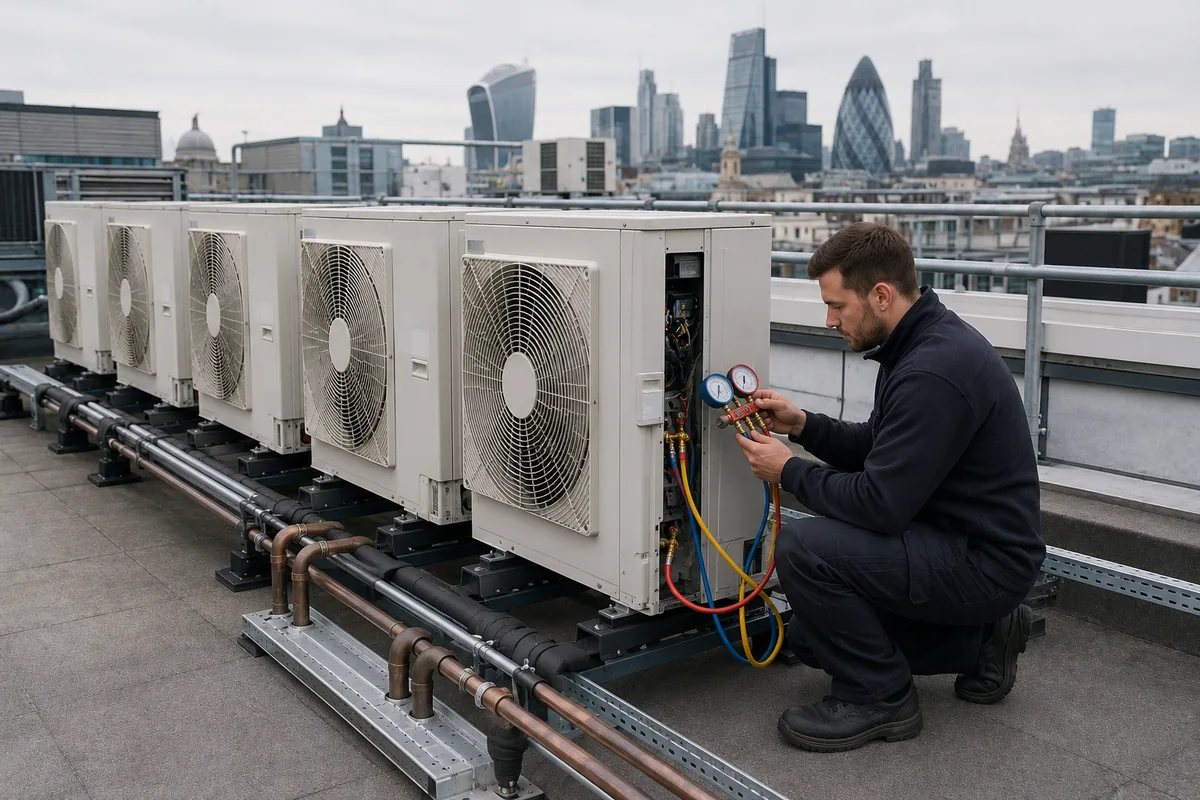
The plant most worth maintaining, and most often neglected.
Air conditioning fails in the first hot week, heating fails in the first cold one, and both fail because they were not serviced in the quiet months in between.
It is also expensive plant. The gap between a serviced system reaching its design life and an unserviced one being replaced early is the largest single avoidable cost in most maintenance budgets.
What we keep working.
- Split, multi-split and VRF air conditioning systems
- Air handling units, ventilation and extract systems
- Commercial boilers, heating circuits and hot water plant
- Controls, thermostats and building management interfaces
- Filter replacement, coil cleaning and condensate management
- F-Gas leak checking and record keeping where the system requires it
A contract, not just a call-out number.
The commercial argument for an HVAC contract is straightforward: two planned visits a year, timed before the cooling season and before the heating season, cost less than one emergency compressor replacement in August.
Servicing also protects manufacturer warranties, which are routinely voided by an absence of servicing records rather than by any fault of the equipment.
Why service it
Two planned visits cost less than one August compressor.
Timed to the season
Serviced before the cooling season and before the heating season, so failures happen on a schedule rather than in the first hot week.
Plant reaches its design life
The difference between a serviced system lasting its full life and an unserviced one being replaced early is the biggest number in the budget.
Warranties protected
Manufacturer warranties are routinely voided by missing servicing records rather than by equipment fault.
F-Gas handled
We will tell you which systems are in scope for leak checking, at what frequency, and keep the records for you.
Straight answers on replacement
Where a unit is beyond economic repair we will say so and price the replacement rather than keep charging for attendances.
Fewer temperature complaints
Nothing generates more facilities complaints than heating and cooling. Servicing is the cheapest way to reduce them.
Where it matters
Buildings where HVAC failure costs most.
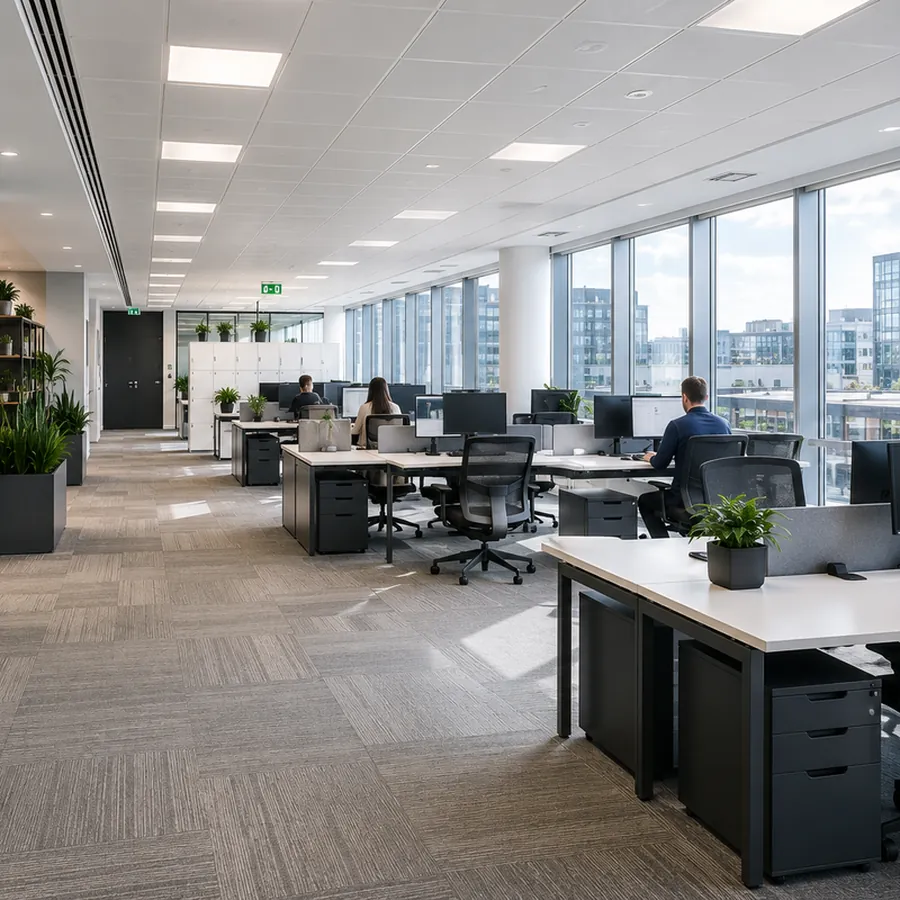
Offices and workspace
Temperature is the complaint that fills the facilities inbox. VRF and split systems serviced before summer and boilers before winter cut it more than anything else.
Maintenance for offices and workspace →
Retail
Units with the doors open all day, plant on the roof nobody looks at, and a failed system in July that empties the shop faster than a broken till.
Maintenance for retail →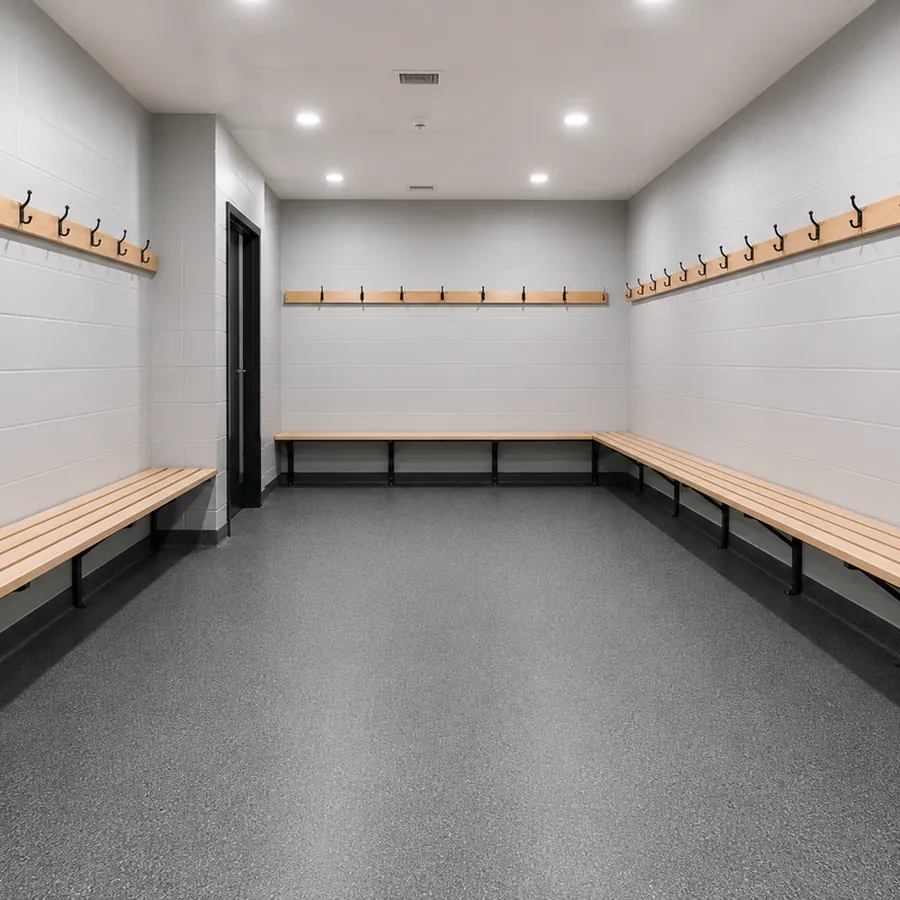
Leisure and sports facilities
Ventilation and heating serving wet areas and halls, running long hours in humid conditions and failing early when filters and coils are left.
Maintenance for leisure and sports facilities →How we work
How HVAC servicing runs.
- 01
Register the plant
Every unit, its refrigerant and charge, its age and its manufacturer interval, so we know which systems fall under F-Gas leak checking and how often.
- 02
Two seasonal visits
Cooling plant serviced before summer, heating plant before winter: filters, coils, condensate, controls and a leak check where the charge requires it.
- 03
Repair or replace, honestly
Faults found on a visit are priced. Where a unit is beyond economic repair we say so and price the replacement rather than keep attending.
- 04
Keep the records
Service sheets and F-Gas records filed against the building, so the warranty and the regulator are both satisfied without a search.
Common questions
Questions we get asked about HVAC.
How often should commercial air conditioning be serviced?
Twice a year is standard for most commercial systems, typically before the cooling season and before the heating season. High-use environments and systems serving server rooms or catering areas often need more.
What are F-Gas obligations?
Systems containing fluorinated greenhouse gases above certain thresholds require periodic leak checking and record keeping, with the frequency depending on the charge size. We will tell you which of your systems are in scope and maintain the records.
Do you repair as well as service?
Yes, including reactive attendance when a system fails. Where a unit is beyond economic repair we will say so and price the replacement rather than keep charging for attendances.
Can you take on a system another contractor installed?
Yes. We will inspect it, record the asset details and set the servicing schedule from its actual condition and manufacturer requirements.
Elsewhere on the site
Related services
Planned preventive maintenance
HVAC servicing as part of the wider planned calendar.
See planned preventive maintenance →Reactive maintenance
When heating or cooling fails outside the schedule.
See reactive maintenance →Commercial electrical
Power supplies, controls and isolation for HVAC plant.
See commercial electrical →F-Gas compliance
Which systems need leak checks, how often, and the record the operator must keep.
See f-Gas compliance →Book a walk round
Tell us about the building. We will do the rest.
What it is, where it is, and which part of running it is causing you grief. We walk the building, write down what is there, and come back with a scope and a price.