
Maintained before it fails
Planned Preventive Maintenance in London
A servicing calendar built around your building’s actual assets and legal obligations, so plant is maintained before it fails rather than after.
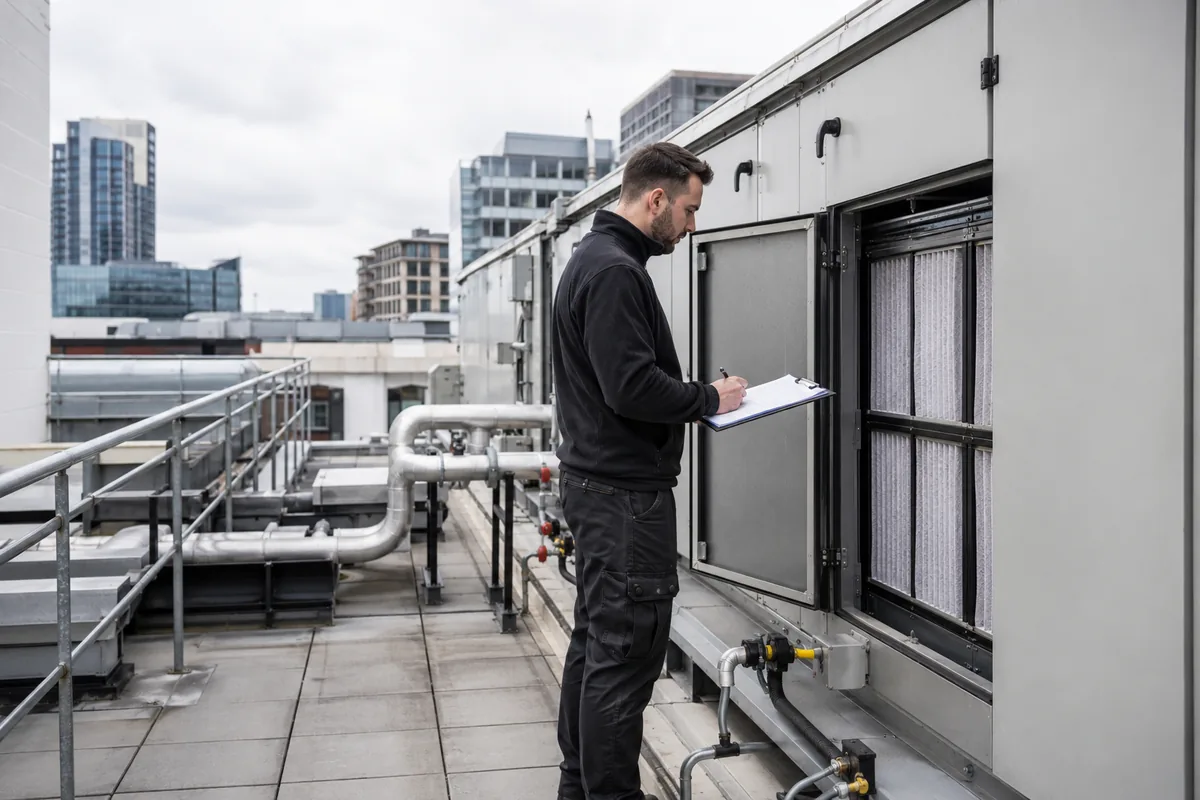
What planned preventive maintenance from Guardian is, and how the schedule is built.
Planned preventive maintenance (PPM) from Guardian Management Group is a servicing calendar for a London commercial building, built from an asset register rather than a standard package. We record what plant the building actually has, its age and condition, the manufacturer servicing interval and what the law requires regardless of condition, and the schedule comes out of that. It covers mechanical plant (boilers, air conditioning, ventilation and pumps), electrical distribution and lighting, water systems, building fabric such as roofs, gutters and drainage, and the statutory tests: fixed wire testing, emergency lighting, fire alarm and fire door inspection, water hygiene, gas safety and lifting equipment. It is for facilities managers, managing agents, landlords and owner-occupiers who want plant maintained before it fails and a compliance position that holds up when examined. It runs at a fixed monthly cost, itemised so each element is visible, and every visit produces a record of what was serviced, what was found and what is outstanding.
PPM is only worth buying if it is built on an asset list.
A planned maintenance schedule that was not built from a walk round is a price list with dates on it. It will service things the building does not have and miss things it does.
Ours starts with the asset register, and the statutory intervals in the table further down this page are set against it, so the legal minimum is the floor of the schedule rather than something tracked separately.
What sits on a planned schedule.
- Statutory testing: fixed wire testing, emergency lighting, fire alarm and detection, fire door inspection, water hygiene and legionella, gas safety, lifting equipment
- Mechanical plant: boilers, air conditioning, ventilation, pumps, water heaters
- Electrical: distribution, lighting, portable appliance testing where required
- Water systems: tanks, temperature monitoring, flushing regimes
- Building fabric: roofs, gutters, drainage, external decoration cycles
- Condition-based work identified during servicing and scheduled rather than forgotten
The commercial case, honestly stated.
Planned maintenance does not eliminate reactive callouts and anybody promising that is selling something. What it does is change the mix: fewer emergency attendances at out-of-hours rates, fewer total failures of expensive plant, and a compliance position that holds up when it is examined.
It also makes the spend predictable. A fixed monthly cost against a known schedule is easier to budget and easier to defend than a year of unforecast callouts.
Evidence, not assurances.
Every planned visit produces a record: what was serviced, what was found, what was remedied and what needs following up. Statutory work produces a certificate filed against the building.
The test of a PPM contract is whether you can answer an insurer, a landlord or an auditor in ten minutes without ringing your contractor. That is the standard we build to.
| Obligation | Interval | Legal basis and standard |
|---|---|---|
| Fixed wire testing (EICR) | 5 years for offices, shops and most commercial premises; 3 years for industrial units, leisure complexes and theatres; 1 year for swimming pools and places of public entertainment; sooner where the last report recommends it or on change of occupancy | Electricity at Work Regulations 1989, regulation 4(2); BS 7671 with IET Guidance Note 3 |
| Emergency lighting | Monthly function test of every luminaire; annual test for the full rated duration, usually three hours; daily indicator check where a central battery system is fitted | Regulatory Reform (Fire Safety) Order 2005, article 17; BS 5266-1; BS EN 50172 (BS 5266-8) |
| Fire alarm and detection | Weekly call point test by the occupier, rotating through every call point; inspection and servicing by a competent person at intervals not exceeding 6 months | Regulatory Reform (Fire Safety) Order 2005, article 17; BS 5839-1 |
| Fire doors | Residential buildings with a storey over 11 m: communal fire doors quarterly, flat entrance doors annually. Commercial premises: at least every 6 months as best practice, more often on busy doors | Regulatory Reform (Fire Safety) Order 2005, article 17; Fire Safety (England) Regulations 2022, regulation 10; BS 8214 and BS 9999 |
| Fire risk assessment | Reviewed regularly and after any material change to the building, its use or its occupancy; an annual review is common practice | Regulatory Reform (Fire Safety) Order 2005, article 9 (recorded in full since October 2023 under the Building Safety Act 2022) |
| Fire extinguishers | Monthly visual check by the responsible person; annual basic service by a competent person; extended service at 5 years, 10 years for CO2 extinguishers | Regulatory Reform (Fire Safety) Order 2005, article 17; BS 5306-3 |
| Water hygiene and legionella | Monthly sentinel outlet temperatures; weekly flushing of little-used outlets; quarterly shower head clean and descale; annual cold water tank inspection; risk assessment reviewed regularly and on any change, two years being the common cycle | Health and Safety at Work etc. Act 1974; COSHH 2002; ACOP L8; HSG274 Part 2 |
| Gas safety | Annual safety inspection and service of appliances, flues and pipework by a Gas Safe registered engineer; annual gas safety record where the premises are let | Gas Safety (Installation and Use) Regulations 1998, regulation 35 (regulation 36 where residential lets exist) |
| Passenger lifts | Thorough examination every 6 months by a competent person, or to a written examination scheme; routine servicing between examinations to the manufacturer’s schedule | Lifting Operations and Lifting Equipment Regulations 1998, regulation 9 |
| Other lifting equipment (hoists, platforms, accessories) | Every 6 months where people are lifted and for lifting accessories; every 12 months for other lifting equipment | Lifting Operations and Lifting Equipment Regulations 1998, regulation 9 |
| F-Gas leak checks (air conditioning and refrigeration) | Systems holding 5 to 50 tonnes CO2e: every 12 months; 50 to 500 tonnes: every 6 months; over 500 tonnes: every 3 months. Intervals double where automatic leak detection is fitted | Fluorinated Greenhouse Gases Regulations 2015 (retained EU Regulation 517/2014, article 4) |
| Portable appliance testing (PAT) | No fixed legal interval. Risk-based, set by equipment type, how it is used and where; user checks between formal inspections | Electricity at Work Regulations 1989, regulation 4(2); HSE INDG236; IET Code of Practice for In-service Inspection and Testing |
| Asbestos duty to manage | Register and management plan reviewed regularly and on any change to the building or its use; condition of known materials re-inspected, typically annually | Control of Asbestos Regulations 2012, regulation 4 |
Why planned pays
Not fewer problems. Cheaper, quieter, more predictable ones.
Planned maintenance does not eliminate reactive callouts, and anyone promising that is selling something. What it changes is the mix.
Built from an asset register
A schedule that was not built from a walk round is a price list with dates on it. It services things you do not have and misses things you do.
Fewer out-of-hours rates
Work moves from emergency attendance at premium rates into planned visits at planned prices. That is where the saving actually comes from.
Plant reaches its design life
The gap between a serviced system lasting its full life and an unserviced one being replaced early is the largest avoidable cost in most budgets.
Warranties stay valid
Manufacturer warranties are routinely voided by missing servicing records rather than by any fault of the equipment.
Compliance rides along
Statutory testing sits inside the same calendar, so the legal obligations are not a separate thing anyone can forget.
Budgetable
A fixed monthly cost against a known schedule, with remedials priced separately so nothing is buried.
Where it matters most
Buildings where planned beats reactive by the widest margin.
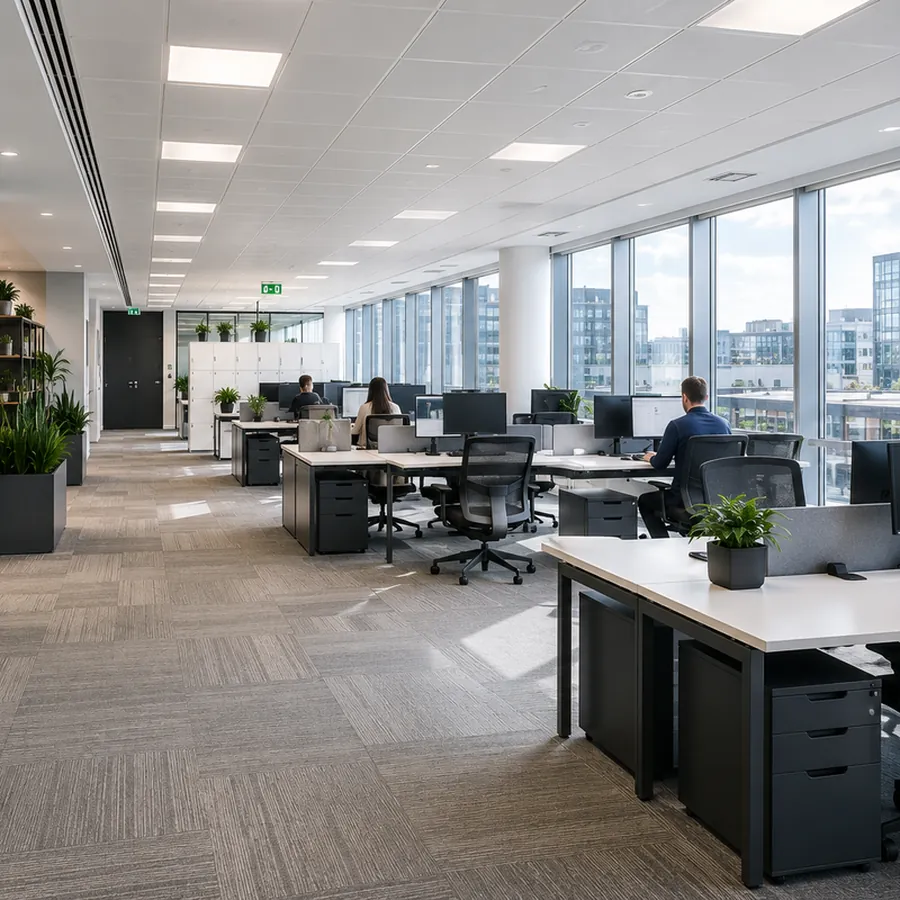
Offices and workspace
Air conditioning serviced before the cooling season and heating before the cold one is the single highest-return line on an office schedule.
Maintenance for offices and workspace →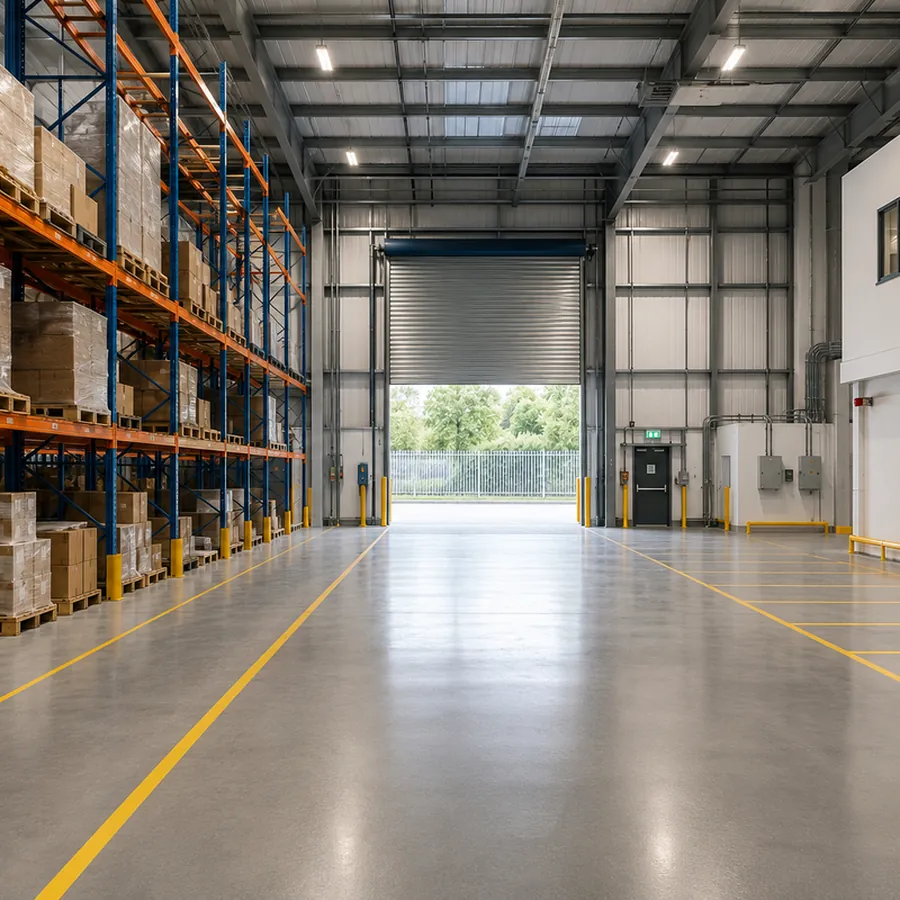
Industrial and warehouse
Gutter clearance, roof inspection and loading bay door servicing, planned for the quiet months so the building is not found wanting in the first storm.
Maintenance for industrial and warehouse →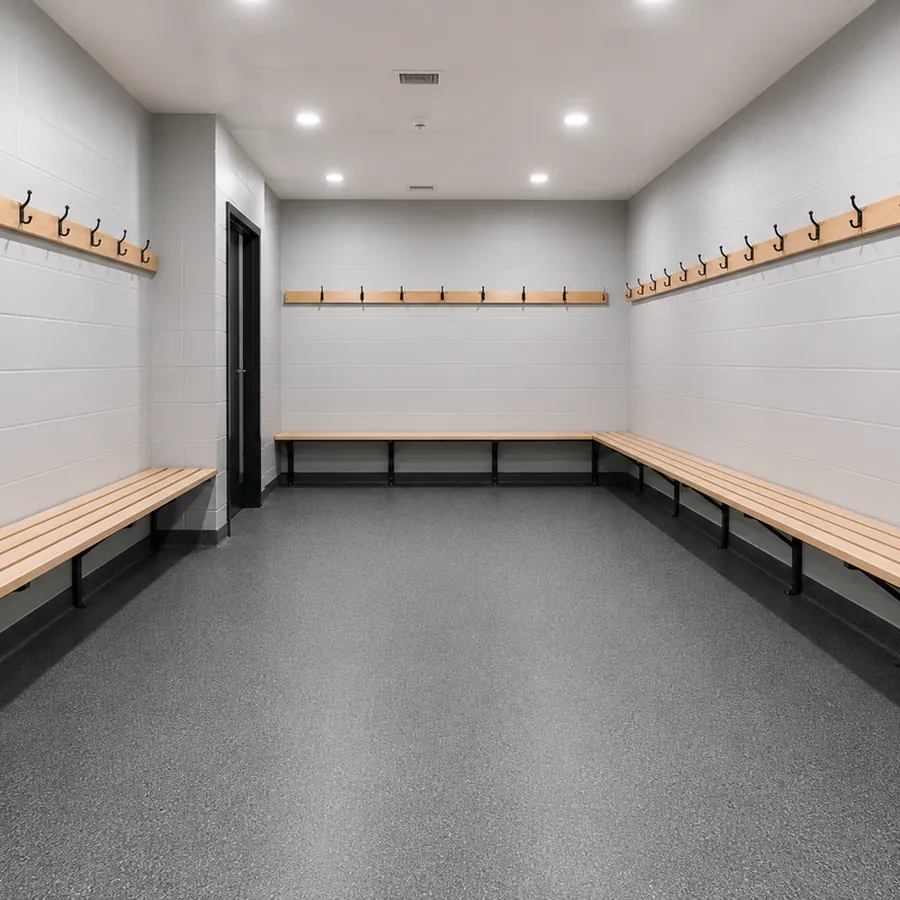
Leisure and sports facilities
Showers, valves, water heaters and drainage that take more punishment than anything else, serviced on a cycle that stops limescale writing the schedule for you.
Maintenance for leisure and sports facilities →How we work
How the schedule gets built.
- 01
Asset register
What plant is in the building, its age, its condition and its manufacturer servicing interval. Recorded once, kept current.
- 02
Obligations mapped
What the law requires regardless of condition, set against the asset list. Where statutory and manufacturer intervals conflict, the stricter applies.
- 03
Calendar and price
A visit schedule and a fixed monthly cost, itemised so you can see what each element buys.
- 04
Findings closed out
Every visit produces a record and, usually, a remedial list. Those get priced and scheduled rather than rediscovered at the next service.
Common questions
Questions we get asked about PPM.
Guidance reviewed September 2026
What does PPM stand for?
Planned preventive maintenance, sometimes written planned preventative maintenance. It means servicing and inspecting equipment on a schedule to prevent failure, as opposed to reactive maintenance which responds after something breaks.
How are the intervals decided?
Three inputs: statutory requirements where the law sets a frequency, manufacturer recommendations for plant under warranty or in good condition, and observed condition for older assets. Where those conflict, the strictest applies.
Can you take over an existing PPM schedule?
Yes, and it is worth auditing it when we do. It is common to find assets being serviced more often than required, which is money, alongside statutory items that have been missed entirely, which is risk.
What happens when a service finds a problem?
It is logged with a priority and quoted. Safety-critical findings are raised immediately. Non-urgent findings go onto a remedial list so they can be planned and budgeted rather than becoming next winter’s emergency.
What is the difference between PPM and reactive maintenance?
PPM is scheduled servicing carried out on a calendar, based on age, condition, manufacturer intervals and statutory requirements. Reactive maintenance responds after something has already failed. A well-run building normally holds both, with PPM reducing how often the reactive line rings rather than replacing it.
Is planned preventive maintenance a legal requirement?
Not as a single named obligation, but several of the things a PPM schedule covers are legal requirements in their own right, such as fixed wire testing, emergency lighting testing, fire door inspection and gas safety checks. PPM is the practical way most buildings meet those separate legal duties on one calendar rather than as isolated obligations. The typical intervals are set out in the table on this page.
Elsewhere on the site
Related services
Building compliance
The statutory half of a planned schedule, in one place.
See building compliance →Reactive maintenance
For everything the calendar cannot predict.
See reactive maintenance →Commercial maintenance contracts
The three contract types, what the fee covers and how to change contractor without a gap.
See commercial maintenance contracts →Facilities management
PPM as part of a full management contract.
See facilities management →Statutory compliance calendar
The statutory intervals a planned schedule is built around, test by test.
See statutory compliance calendar →Book a walk round
Tell us about the building. We will do the rest.
What it is, where it is, and which part of running it is causing you grief. We walk the building, write down what is there, and come back with a scope and a price.