
Multi-trade, single accountability
Commercial Building Maintenance in London
Keeping commercial buildings working: planned servicing, reactive repairs and the statutory testing that has to happen whether anyone remembers it or not.
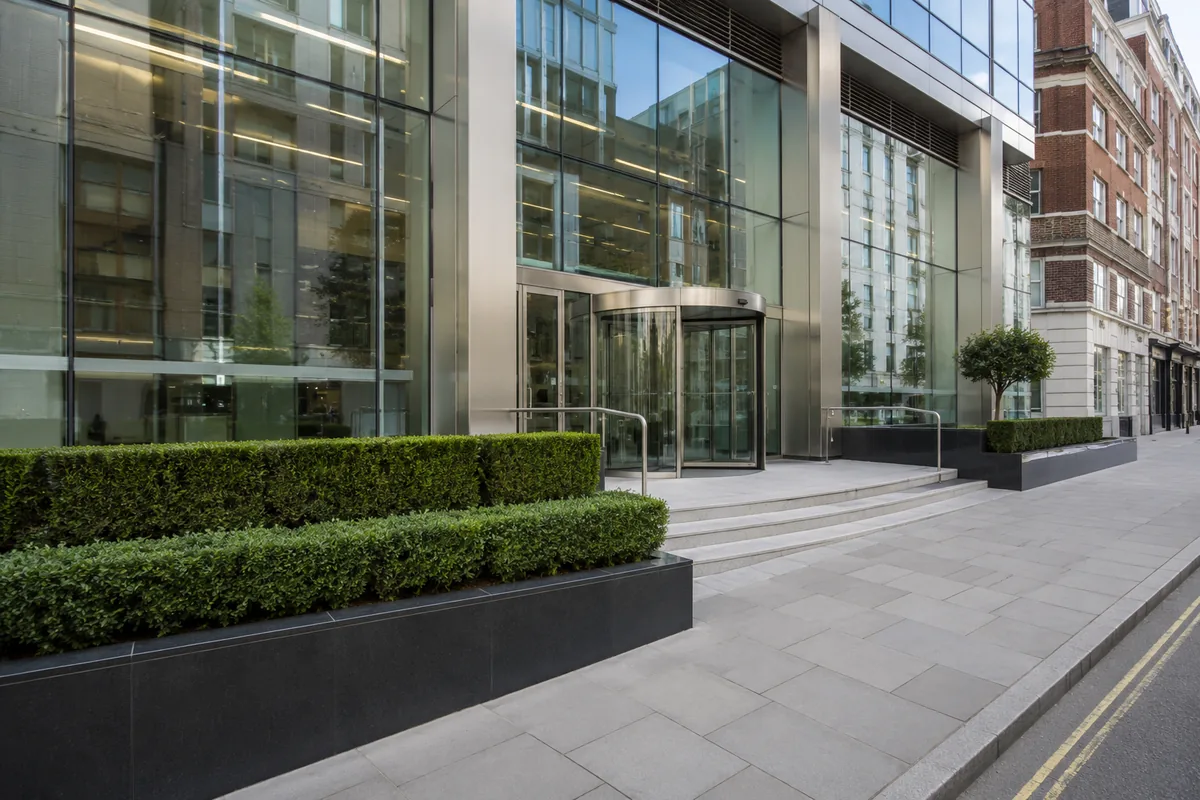
What commercial building maintenance from Guardian includes.
Commercial building maintenance from Guardian Management Group keeps the fabric and services of a London commercial building working, under one contract with one accountable party. It covers the fabric (walls, floors, ceilings, doors, roofs and gutters), the building services (electrical, heating, ventilation and air conditioning, plumbing and drainage), fire safety equipment, and the external areas and grounds. It is for the people who answer for a building: facilities and property managers, managing agents, landlords and owner-occupiers of offices, industrial units, shops, leisure facilities and mixed-use blocks. The contract runs as three jobs on one system: planned servicing at intervals set against the asset list, reactive repairs through a line answered around the clock, and the statutory testing that has to happen whether anyone remembers it or not. It starts with a walk round rather than a price list, and every job is closed with a record, so what is done, due and outstanding is always visible.
Maintenance is three jobs pretending to be one.
A maintenance contract usually gets sold as a single thing. In practice it is three, and they fail in different ways.
Planned work fails quietly, by slipping. Reactive work fails loudly, at the worst possible time. Compliance fails invisibly, and you find out when an insurer or an auditor asks for a certificate that nobody has.
We run all three, on one system, so the failure modes are visible before they become expensive.
What we keep working.
- Building fabric: walls, floors, ceilings, doors, windows, roofs and gutters
- Electrical systems, distribution, lighting and emergency lighting
- Heating, ventilation and air conditioning
- Plumbing, drainage, sanitaryware and water systems
- Fire safety equipment, fire doors and means of escape
- External areas, car parks and grounds
The building type is not the common factor.
Offices and workspace, industrial and warehouse units, retail, leisure and sports facilities, community and education buildings, and mixed-use blocks where commercial and residential sit under one roof.
The common factor is not the building type. It is that somebody is accountable for it working, and would rather that were one phone call than six.
It starts with a walk round, not a price list.
It starts with a walk round and an asset list. We record what is in the building, what condition it is in and what it legally needs, then set the servicing intervals against that rather than against a standard package.
The output is a maintenance calendar and a compliance position you can actually see: what is due, what is overdue, what is scheduled and what it costs.
What you get
Maintenance that is visible, not assumed.
An asset list, first
What is in the building, how old it is, what condition it is in and what it legally needs. Everything else is built from that.
Planned and reactive together
Held separately they fight each other. Held together, callout patterns change the servicing schedule and the schedule reduces the callouts.
Remedials that close
A finding on a service visit is priced and scheduled, not filed. Open remedials are where most maintenance contracts quietly fail.
One trade or all of them
Start with the discipline causing the problem. Widening later is a conversation, not a re-tender.
Occupied-building working
Evening, weekend and phased working as the default assumption rather than a premium discovered later.
Straight answers on scope
We will tell you what we self-deliver and what we manage through an accredited specialist. Nobody benefits from finding that out later.
Buildings we maintain
Every commercial building type in London.
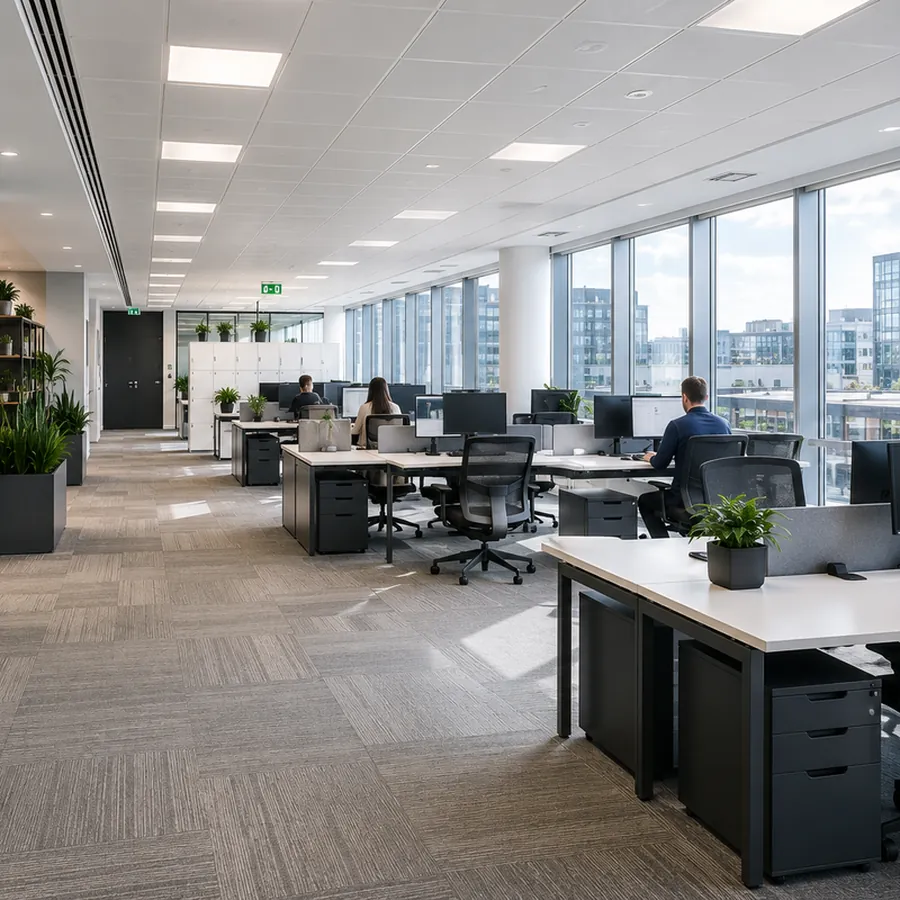
Offices and workspace
Fabric that takes a beating from churn: desk moves, cabling and partition changes, plus the washrooms and air conditioning that generate most of the complaints.
Maintenance for offices and workspace →
Retail
Shopfronts, shutters, glazing and entrance floors take the impact, and every hour a unit is shut has a number attached. Work runs early, late or overnight.
Maintenance for retail →
Industrial and warehouse
Roofs, gutters, rooflights, yard drainage and loading bay doors. The envelope is where these buildings fail, and usually somewhere high up.
Maintenance for industrial and warehouse →How we work
From first call to first invoice.
- 01
Walk the building
We record what is actually there: plant, age, condition and what the law requires of it. No schedule is worth anything if it was written from a price list rather than a walk round.
- 02
Write it down
A scope, a schedule and a price, itemised so it can be phased. You should be able to see what each part costs and decide what happens first.
- 03
Work around the building
Phased, out of hours, room by room or floor by floor. The building carries on being used; that is the constraint we plan against, not an inconvenience we discover.
- 04
Evidence it
Every job closed with an outcome, every statutory certificate filed against the building. The test is whether you can answer an insurer or an auditor without ringing us.
Common questions
Questions we get asked about maintenance.
What is the difference between building maintenance and facilities management?
Maintenance is keeping the fabric and services of the building working. Facilities management is broader: it usually adds soft services such as cleaning and grounds, plus the management layer that coordinates everything and reports on it. Many clients start with maintenance and widen into full FM.
Do you offer maintenance contracts or ad hoc work?
Both. Contracts give you scheduled servicing, an agreed response time and a fixed monthly cost. Ad hoc work is priced per job. Most buildings end up with a contract for planned and compliance work and a call-off arrangement for reactive.
Can you take over an existing maintenance schedule?
Yes. Bring the existing schedule and certificates and we will audit them against what the building actually needs. It is common to find both gaps and items being serviced more often than the law or the manufacturer requires.
How quickly can you attend?
Response times are agreed per contract and per priority level. Genuine emergencies such as loss of power, water ingress, or anything affecting safety or security are treated as attend-now rather than next-available.
Who is responsible for maintenance, the landlord or the tenant?
It depends on the lease. In a fully repairing lease the tenant usually carries most maintenance obligations; in a multi-let building the landlord or managing agent typically covers common parts and structure through the service charge. The demise boundary is worth getting written down clearly before a contract starts, because most maintenance disputes come from that boundary being unclear rather than from poor workmanship.
How do I switch building maintenance contractors without a gap in cover?
Bring the existing schedule, certificates and any open remedial list to the new contractor before the handover date, and agree a start date that overlaps the notice period on the old contract rather than following straight after it ends. A short gap is where compliance items go quietly overdue.
Elsewhere on the site
Related services
Planned preventive maintenance
The scheduled half: servicing intervals set against the asset list.
See planned preventive maintenance →Building repairs
Multi-trade repair work, including everything that is not a named discipline.
See building repairs →Facilities management
The full management layer, including soft services and reporting.
See facilities management →Book a walk round
Tell us about the building. We will do the rest.
What it is, where it is, and which part of running it is causing you grief. We walk the building, write down what is there, and come back with a scope and a price.