
One calendar, one certificate library
Statutory Compliance Testing and Maintenance in London
Every statutory test and inspection a London commercial building needs, from the EICR to the legionella review, on one calendar, under one contract, with every certificate filed against the building rather than scattered across contractors.
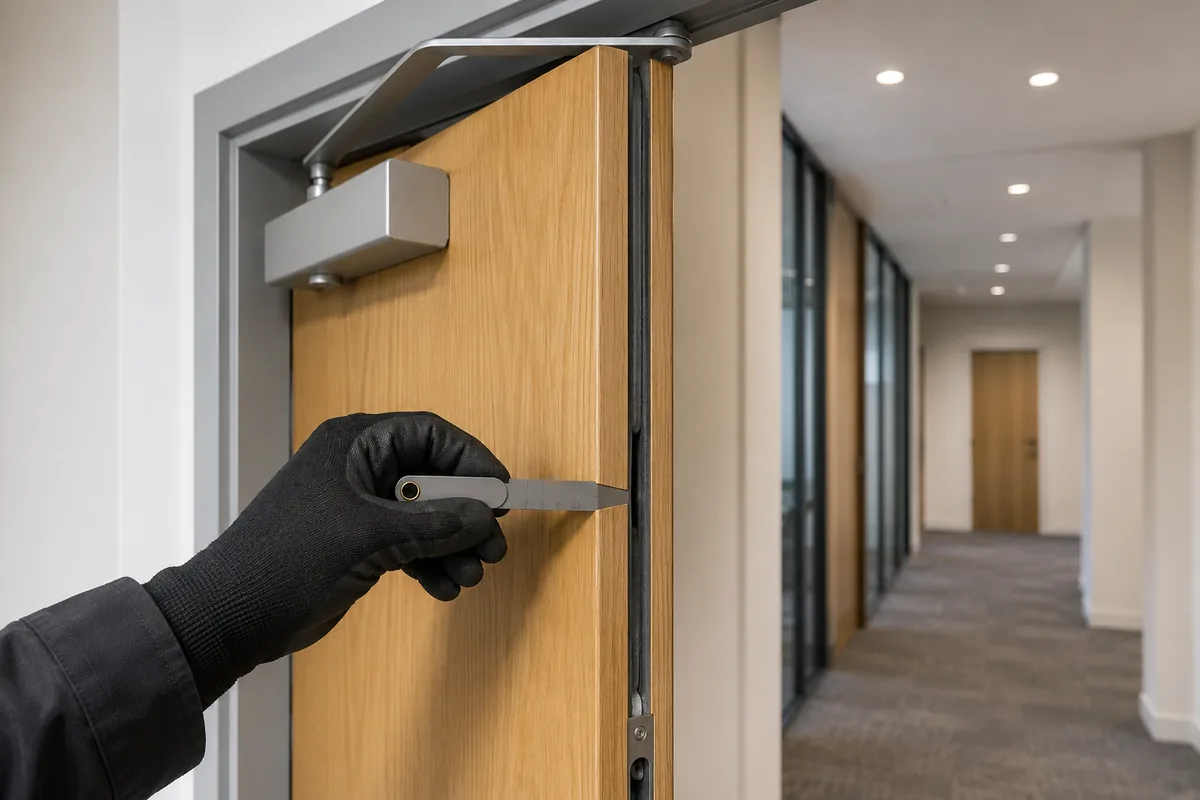
What statutory compliance testing and maintenance covers.
Statutory compliance testing and maintenance from Guardian Management Group is one contract that keeps every legally required test and inspection for a London commercial building in date, on one calendar, with every certificate filed against the building. It covers fixed wire testing (EICR), emergency lighting, fire alarm and extinguisher servicing, fire door inspection, fire risk assessment review, water hygiene and legionella, gas safety, lifting equipment (LOLER), F-Gas leak checks, portable appliance testing and the asbestos duty to manage, plus the remedial work each raises. It is for facilities managers, managing agents, landlords and owner-occupiers who have to answer an insurer or an auditor and want to do it without ringing a contractor first. Some tests we self-deliver; the credential-gated ones, such as legionella risk assessment, lift thorough examination and asbestos surveying, are done by accredited specialists we arrange, manage and evidence. In every case we own the calendar, chase the certificate, price the remedials and book the next cycle.
Compliance rarely fails through neglect. It fails through fragmentation.
For a London commercial building the compliance load is relentless: fixed wire testing, emergency lighting, fire alarm servicing, fire door inspection, water hygiene, gas safety, lifting equipment, asbestos management. The typical frequency for each, and the standard behind it, is in the table further down this page.
The usual failure is not that somebody decided to skip a test. It is that eight different contractors each hold their own paperwork, on their own cycle, and nobody holds the whole picture. The gap only becomes visible when an insurer, a landlord or an auditor asks, which is the worst moment to discover it.
This service exists to hold the whole picture.
Everything that has to happen, whether anyone remembers or not.
Delivered or managed, and we tell you which.
Some of this work we self-deliver. Some of it is legitimately credential-gated: legionella risk assessment, lift thorough examination, UKAS-accredited asbestos surveying. The honest position is that those should be done by accredited specialists.
What we do in every case is own the calendar, arrange the visit, chase the certificate, log the remedial actions and make sure the next cycle is booked. You get one contract and one accountable party. You do not get a contractor pretending to hold accreditations it does not have.
Remedials are where compliance actually breaks down.
A test produces a certificate and, usually, a list of things to put right. Those remedial actions are where compliance most often stalls: the test happened, the report landed, and the C2 observations sat in an inbox until the next test found them again.
Remedial actions raised by any inspection go straight onto the works schedule with a priority and a price. That closes the loop, which is the only part of compliance that actually reduces risk.
| Obligation | Interval | Legal basis and standard |
|---|---|---|
| Fixed wire testing (EICR) | 5 years for offices, shops and most commercial premises; 3 years for industrial units, leisure complexes and theatres; 1 year for swimming pools and places of public entertainment; sooner where the last report recommends it or on change of occupancy | Electricity at Work Regulations 1989, regulation 4(2); BS 7671 with IET Guidance Note 3 |
| Emergency lighting | Monthly function test of every luminaire; annual test for the full rated duration, usually three hours; daily indicator check where a central battery system is fitted | Regulatory Reform (Fire Safety) Order 2005, article 17; BS 5266-1; BS EN 50172 (BS 5266-8) |
| Fire alarm and detection | Weekly call point test by the occupier, rotating through every call point; inspection and servicing by a competent person at intervals not exceeding 6 months | Regulatory Reform (Fire Safety) Order 2005, article 17; BS 5839-1 |
| Fire doors | Residential buildings with a storey over 11 m: communal fire doors quarterly, flat entrance doors annually. Commercial premises: at least every 6 months as best practice, more often on busy doors | Regulatory Reform (Fire Safety) Order 2005, article 17; Fire Safety (England) Regulations 2022, regulation 10; BS 8214 and BS 9999 |
| Fire risk assessment | Reviewed regularly and after any material change to the building, its use or its occupancy; an annual review is common practice | Regulatory Reform (Fire Safety) Order 2005, article 9 (recorded in full since October 2023 under the Building Safety Act 2022) |
| Fire extinguishers | Monthly visual check by the responsible person; annual basic service by a competent person; extended service at 5 years, 10 years for CO2 extinguishers | Regulatory Reform (Fire Safety) Order 2005, article 17; BS 5306-3 |
| Water hygiene and legionella | Monthly sentinel outlet temperatures; weekly flushing of little-used outlets; quarterly shower head clean and descale; annual cold water tank inspection; risk assessment reviewed regularly and on any change, two years being the common cycle | Health and Safety at Work etc. Act 1974; COSHH 2002; ACOP L8; HSG274 Part 2 |
| Gas safety | Annual safety inspection and service of appliances, flues and pipework by a Gas Safe registered engineer; annual gas safety record where the premises are let | Gas Safety (Installation and Use) Regulations 1998, regulation 35 (regulation 36 where residential lets exist) |
| Passenger lifts | Thorough examination every 6 months by a competent person, or to a written examination scheme; routine servicing between examinations to the manufacturer’s schedule | Lifting Operations and Lifting Equipment Regulations 1998, regulation 9 |
| Other lifting equipment (hoists, platforms, accessories) | Every 6 months where people are lifted and for lifting accessories; every 12 months for other lifting equipment | Lifting Operations and Lifting Equipment Regulations 1998, regulation 9 |
| F-Gas leak checks (air conditioning and refrigeration) | Systems holding 5 to 50 tonnes CO2e: every 12 months; 50 to 500 tonnes: every 6 months; over 500 tonnes: every 3 months. Intervals double where automatic leak detection is fitted | Fluorinated Greenhouse Gases Regulations 2015 (retained EU Regulation 517/2014, article 4) |
| Portable appliance testing (PAT) | No fixed legal interval. Risk-based, set by equipment type, how it is used and where; user checks between formal inspections | Electricity at Work Regulations 1989, regulation 4(2); HSE INDG236; IET Code of Practice for In-service Inspection and Testing |
| Asbestos duty to manage | Register and management plan reviewed regularly and on any change to the building or its use; condition of known materials re-inspected, typically annually | Control of Asbestos Regulations 2012, regulation 4 |
Why bundle it
You can buy each test separately. Holding the whole picture is the hard part.
One calendar
Every statutory obligation for the building in one place with one set of due dates, instead of eight contractors each on their own cycle.
One certificate library
Certificates filed against the building, not against the contractor who happened to do the test. They stay when the contractor goes.
Remedials that close
The C1s and C2s are what insurers actually read. They go onto the works schedule with a price, rather than sitting in an inbox until the next test finds them again.
Honest about accreditation
We self-deliver a good part of this and use accredited specialists for the credential-gated work. We will always tell you which is which.
Audit in ten minutes
The test of a compliance contract is whether you can answer an insurer, a landlord or an auditor without ringing your contractor first.
Gaps found before an audit does
We will take your existing certificates and show you plainly what is in date, what is overdue and what has never been done at all.
Where the risk concentrates
Buildings where compliance is hardest to hold together.
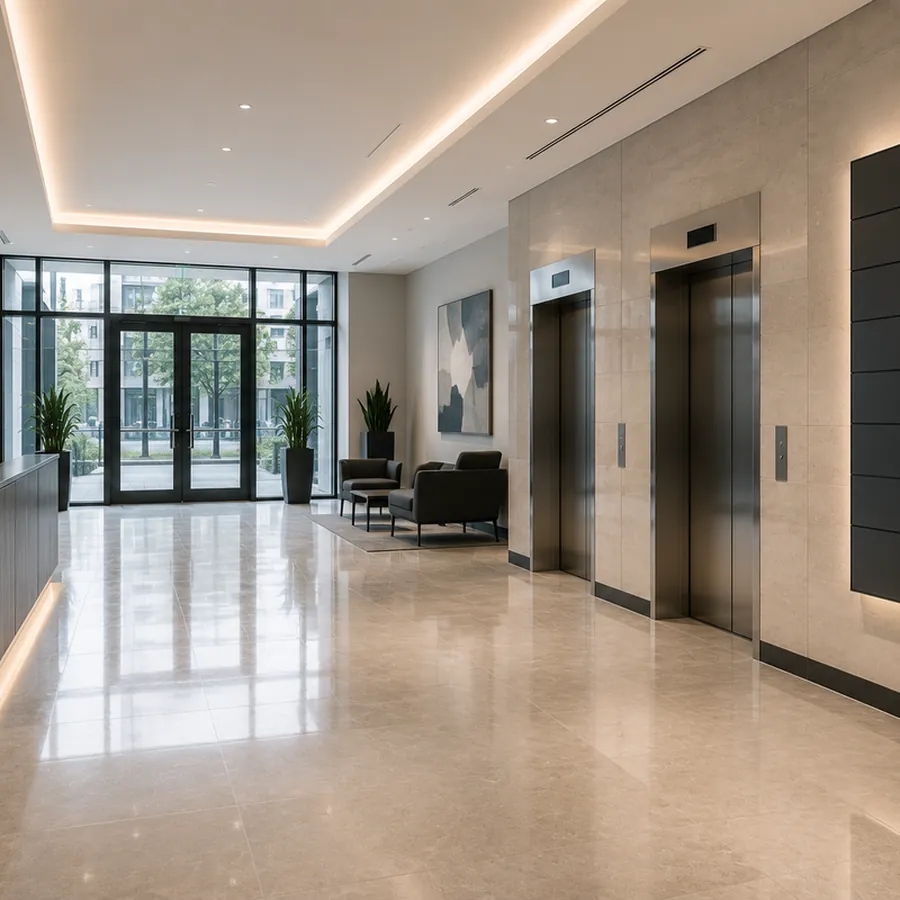
Managing agents and landlords
Multiple buildings, multiple duty holders and a leaseholder or insurer who will eventually ask for evidence.
Maintenance for managing agents and landlords →Retail estates
Twenty small units generate twenty sets of statutory obligations. Tracked centrally it is manageable; tracked per store it is where estates get caught.
Maintenance for retail estates →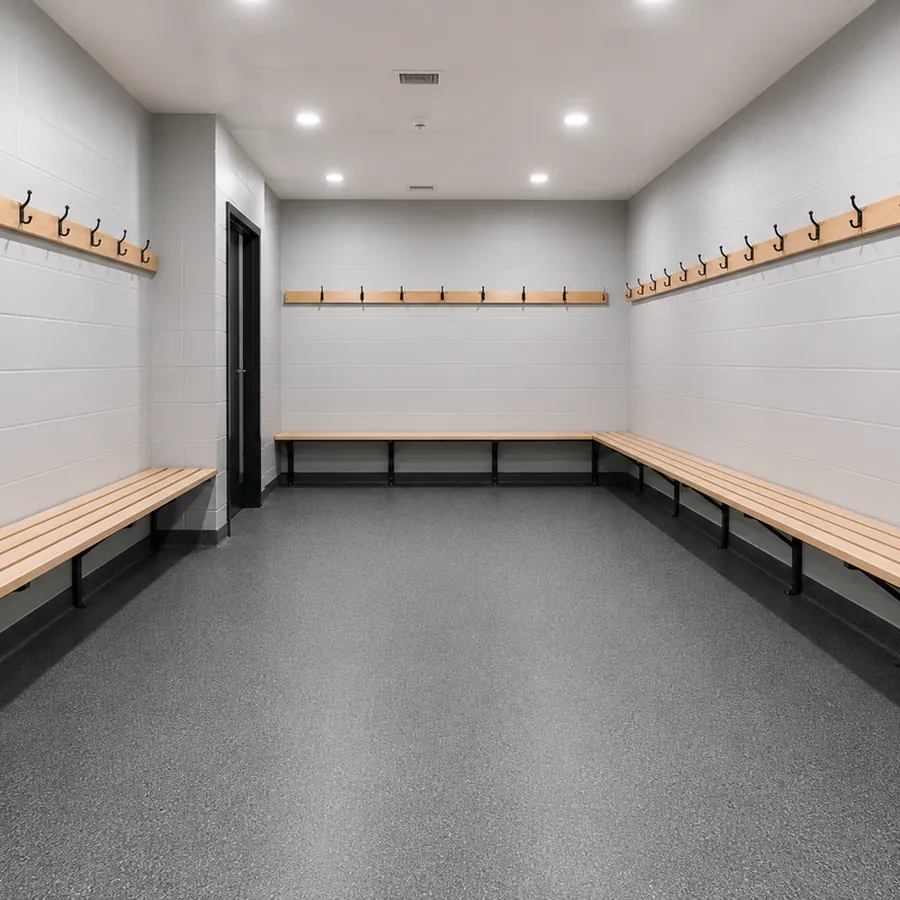
Leisure and public buildings
Water hygiene matters more in a building full of showers, and public access raises the stakes on fire safety.
Maintenance for leisure and public buildings →How we work
How we take compliance on.
- 01
Audit what exists
Your current certificates against what the building actually needs. This is where most of the surprises are.
- 02
Build the calendar
Every obligation with a frequency, a due date and an owner, across one building or a whole portfolio.
- 03
Run the cycle
Visits arranged, certificates chased and filed, next cycle booked before the current one closes.
- 04
Close the remedials
Findings priced and scheduled. The loop closing is the only part that actually reduces risk.
Common questions
Questions we get asked about compliance.
Guidance reviewed September 2026
Can you audit our current compliance position?
Yes, and it is the sensible starting point. We take your existing certificates, build the asset and obligation list for the building, and show you plainly what is in date, what is overdue and what has never been done.
Do you hold the accreditations for all of this yourselves?
No, and any contractor claiming otherwise is worth questioning. We self-deliver a substantial part of it and use accredited specialists for the credential-gated work: legionella risk assessment, lift thorough examination and UKAS-accredited asbestos surveying. We hold the relationship, manage the visit and own the certificate either way.
Who is legally responsible for compliance?
The duty sits with the building owner, the employer or the person in control of the premises, depending on the regulation. A contractor cannot take that duty off you. What we can do is make it straightforward to discharge and easy to evidence that you have.
What happens if a test fails?
The findings are graded and quoted. Anything immediately dangerous is made safe on the visit. Everything else goes onto the remedial schedule with a priority, so it is planned and budgeted rather than rediscovered at the next inspection.
How often does each statutory test need doing?
As a guide: fixed wire testing (EICR) every 5 years for most commercial premises and every 3 years for industrial; emergency lighting a monthly function test and an annual full-duration test; fire alarm a weekly user test and a 6-monthly service; fire doors quarterly on communal doors in residential buildings over 11 m and 6-monthly as best practice elsewhere; legionella monthly temperature checks with the risk assessment reviewed on any change; gas safety annually; LOLER thorough examination every 6 months for equipment lifting people and every 12 months otherwise; F-Gas leak checks every 3, 6 or 12 months by charge size; PAT on a risk-based interval. The full table on this page gives the standard behind each one.
Is this the same as Building Control?
No. Building Control is the regulatory sign-off of construction and alteration work against the Building Regulations, done by a local authority or a registered building control approver. This service is the ongoing statutory testing and maintenance an occupied building needs year after year: EICR, emergency lighting, fire alarm, fire doors, water hygiene, gas and lifting equipment. If you need Building Control for a project, that sits with the project team at Commercial Refurbs London.
Elsewhere on the site
Related services
Planned preventive maintenance
Statutory testing sits inside the wider planned calendar.
See planned preventive maintenance →Commercial electrical
EICR, fixed wire testing and emergency lighting.
See commercial electrical →Facilities management
Compliance as one part of a full FM contract.
See facilities management →Statutory compliance calendar
Every statutory test, its frequency and the standard behind it, on one page.
See statutory compliance calendar →Fire door inspection
Quarterly and annual fire door checks, and the repairs the findings raise.
See fire door inspection →Emergency lighting testing
Monthly function tests and the annual full-duration test, logged and certified.
See emergency lighting testing →F-Gas compliance
Leak check intervals by refrigerant charge, the five-year record and who may do the work.
See f-Gas compliance →Book a walk round
Tell us about the building. We will do the rest.
What it is, where it is, and which part of running it is causing you grief. We walk the building, write down what is there, and come back with a scope and a price.