
Every test, every interval, one page
Statutory compliance calendar for London commercial buildings
A statutory compliance calendar lists every inspection and test the law and the British Standards expect of a building, the interval for each, who is responsible and where the certificate lives. This page sets out the calendar we run for London commercial buildings, with the source for every interval.
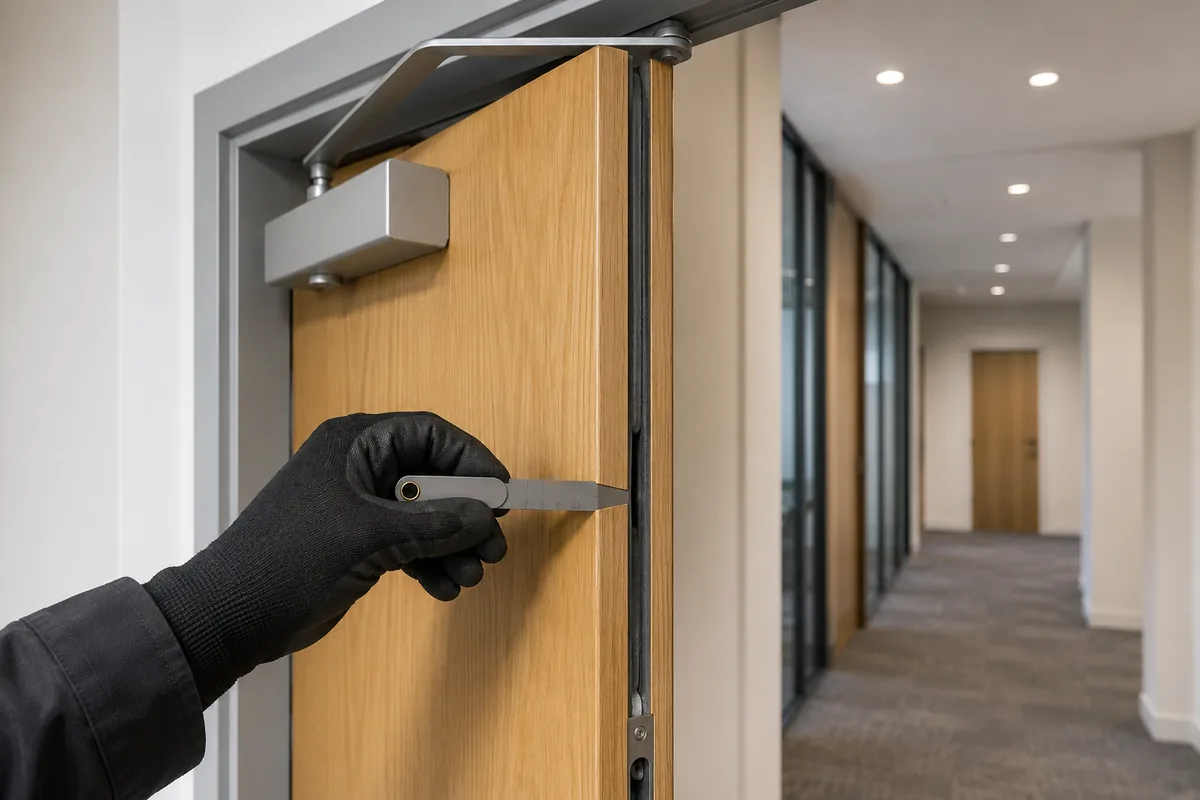
What a statutory compliance calendar is.
A commercial building in England carries a set of recurring legal duties: the electrical installation must be inspected, the emergency lighting tested, the fire alarm serviced, the fire doors checked, the water system monitored, the gas appliances serviced, the lifts thoroughly examined, the air conditioning leak checked and the asbestos register kept current. Each duty has its own regulation, its own British Standard and its own interval.
A compliance calendar puts all of them on one timeline for one building, with the date each is next due, the person or contractor who does it, and the certificate that proves it was done. It is the document an insurer, a landlord, a fire officer or an auditor expects you to be able to produce without ringing anyone.
Most buildings do not have one. They have eight contractors, each holding their own paperwork on their own cycle, and a property manager who finds out what is overdue when somebody asks.
Who is responsible.
The duty cannot be contracted away. A contractor can carry out the test, keep the calendar and chase the certificate, but the legal responsibility stays with the person the regulation names.
- Fire safety: the responsible person under the Regulatory Reform (Fire Safety) Order 2005, which in a workplace is the employer and otherwise the person in control of the premises. Fire alarms, emergency lighting, fire doors, extinguishers and the fire risk assessment all sit here.
- Electrical safety: the duty holder under the Electricity at Work Regulations 1989, which is anyone with control over the electrical system. Fixed wire testing and portable appliance testing sit here.
- Legionella: the duty holder under the Health and Safety at Work etc. Act 1974 and COSHH 2002, following the Approved Code of Practice L8, which is the employer or the person in control of the premises.
- Asbestos: the duty holder under regulation 4 of the Control of Asbestos Regulations 2012, which is whoever has the maintenance obligation for the premises, often the landlord or the occupier depending on the lease.
- Gas: the employer or person in control under regulation 35 of the Gas Safety (Installation and Use) Regulations 1998.
- Lifting equipment: the employer or person with control under the Lifting Operations and Lifting Equipment Regulations 1998.
In a multi-let building the duties are usually split between the landlord for common parts and plant, and each tenant for their demise. The calendar has to say which is which, or the gap between them is where the missed test sits.
How the calendar is run.
The calendar starts with an asset register: every fire door, every emergency luminaire, every distribution board, calorifier, lift, air conditioning unit and gas appliance in the building, with its location and, where it matters, its age. A calendar written without walking the building is a template, and templates miss things.
Each asset is then matched to its obligation and interval from the table below, and the last certificate for each is found or recorded as missing. That first pass is where most surprises are: a test that was done but never filed, a test that was filed but whose remedial actions were never closed, or a test that has simply never been done.
From that point the cycle runs itself. The next visit is booked before the current one closes. The certificate is filed against the building, not against the contractor, so it is still there when the contractor changes. The remedial actions from every report go onto the works schedule with a priority and a price.
- Who reminds whom: the calendar holder gives the responsible person a monthly position of what is due, what is booked and what is overdue. Nobody relies on remembering.
- Where the certificates live: one library per building, indexed by asset, with the report, the remedial list and the close-out evidence together.
- What an auditor sees: the position for the whole building on one page, which is the test of whether the calendar is real.
How to read the table.
The intervals below are the baseline set by the regulation or the British Standard named against each row. A fire risk assessment, an insurer, a manufacturer or the condition of the equipment can shorten an interval. Nothing lengthens one.
Where a row says "common practice" rather than citing a fixed interval, that is deliberate: the law sets the duty but not the frequency, and we say so rather than invent a number.
| Obligation | Interval | Legal basis and standard |
|---|---|---|
| Fixed wire testing (EICR) | 5 years for offices, shops and most commercial premises; 3 years for industrial units, leisure complexes and theatres; 1 year for swimming pools and places of public entertainment; sooner where the last report recommends it or on change of occupancy | Electricity at Work Regulations 1989, regulation 4(2); BS 7671 with IET Guidance Note 3 |
| Emergency lighting | Monthly function test of every luminaire; annual test for the full rated duration, usually three hours; daily indicator check where a central battery system is fitted | Regulatory Reform (Fire Safety) Order 2005, article 17; BS 5266-1; BS EN 50172 (BS 5266-8) |
| Fire alarm and detection | Weekly call point test by the occupier, rotating through every call point; inspection and servicing by a competent person at intervals not exceeding 6 months | Regulatory Reform (Fire Safety) Order 2005, article 17; BS 5839-1 |
| Fire doors | Residential buildings with a storey over 11 m: communal fire doors quarterly, flat entrance doors annually. Commercial premises: at least every 6 months as best practice, more often on busy doors | Regulatory Reform (Fire Safety) Order 2005, article 17; Fire Safety (England) Regulations 2022, regulation 10; BS 8214 and BS 9999 |
| Fire risk assessment | Reviewed regularly and after any material change to the building, its use or its occupancy; an annual review is common practice | Regulatory Reform (Fire Safety) Order 2005, article 9 (recorded in full since October 2023 under the Building Safety Act 2022) |
| Fire extinguishers | Monthly visual check by the responsible person; annual basic service by a competent person; extended service at 5 years, 10 years for CO2 extinguishers | Regulatory Reform (Fire Safety) Order 2005, article 17; BS 5306-3 |
| Water hygiene and legionella | Monthly sentinel outlet temperatures; weekly flushing of little-used outlets; quarterly shower head clean and descale; annual cold water tank inspection; risk assessment reviewed regularly and on any change, two years being the common cycle | Health and Safety at Work etc. Act 1974; COSHH 2002; ACOP L8; HSG274 Part 2 |
| Gas safety | Annual safety inspection and service of appliances, flues and pipework by a Gas Safe registered engineer; annual gas safety record where the premises are let | Gas Safety (Installation and Use) Regulations 1998, regulation 35 (regulation 36 where residential lets exist) |
| Passenger lifts | Thorough examination every 6 months by a competent person, or to a written examination scheme; routine servicing between examinations to the manufacturer’s schedule | Lifting Operations and Lifting Equipment Regulations 1998, regulation 9 |
| Other lifting equipment (hoists, platforms, accessories) | Every 6 months where people are lifted and for lifting accessories; every 12 months for other lifting equipment | Lifting Operations and Lifting Equipment Regulations 1998, regulation 9 |
| F-Gas leak checks (air conditioning and refrigeration) | Systems holding 5 to 50 tonnes CO2e: every 12 months; 50 to 500 tonnes: every 6 months; over 500 tonnes: every 3 months. Intervals double where automatic leak detection is fitted | Fluorinated Greenhouse Gases Regulations 2015 (retained EU Regulation 517/2014, article 4) |
| Portable appliance testing (PAT) | No fixed legal interval. Risk-based, set by equipment type, how it is used and where; user checks between formal inspections | Electricity at Work Regulations 1989, regulation 4(2); HSE INDG236; IET Code of Practice for In-service Inspection and Testing |
| Asbestos duty to manage | Register and management plan reviewed regularly and on any change to the building or its use; condition of known materials re-inspected, typically annually | Control of Asbestos Regulations 2012, regulation 4 |
Where calendars fail
Three ways a building falls out of compliance without anyone deciding to.
The interval nobody owned
The fire alarm company services the alarm. The electrician does the EICR. Nobody was ever asked to test the emergency lighting monthly, so nobody did, and the annual duration test has never happened.
The certificate that left with the contractor
The test was done. The report went to a contractor’s email and a property manager’s laptop. Both have moved on. The insurer asks, and the building has to pay for the test again to prove it.
The remedial that waited for the next test
The EICR raised three C2 observations. They sat in an inbox. Five years later the next EICR raised the same three, and this time the insurer read them.
What we do with it
From certificates in a drawer to a position you can show.
- 01
Walk the building
Build the asset register from what is actually there, not from the last contractor’s quote.
- 02
Find every certificate
Match each asset to its obligation and its last report. Record what is in date, what is overdue and what has never been done.
- 03
Book the cycle
Every test scheduled with an owner, a date and a contractor. Credential-gated tests go to accredited specialists we manage.
- 04
Close the remedials
Every finding priced, prioritised and scheduled, then evidenced when done. The loop closing is the point.
Common questions
Questions we get asked about compliance calendars.
Guidance reviewed September 2026
Is a compliance calendar a legal requirement?
The calendar itself is not named in any regulation. The tests on it are, and so is the duty to be able to show they were done. A calendar is simply the practical way of discharging duties that come from a dozen separate regulations and standards, and of proving it when asked.
Who is the responsible person in a multi-let office building?
Usually the landlord or managing agent for the common parts, plant and the structure, and each tenant for their own demise. The lease sets the boundary. The calendar has to state who owns each item, because the shared assumption that the other party is doing it is how tests get missed.
What is the difference between a statutory test and a best-practice one?
A statutory test is one the law requires, for example a thorough examination of a passenger lift every six months under LOLER. A best-practice interval is one a British Standard or HSE guidance recommends where the law only sets the duty, for example six-monthly fire door checks in commercial premises. We list both and label which is which, because a fire officer or insurer will expect the best-practice interval to have been followed.
Can you take over a calendar that already exists?
Yes. We start from whatever certificates and schedules you hold, check them against the asset register and the table above, and show you the gaps. Where an incumbent contractor is doing a good job on one discipline, we manage around them rather than force a change.
Do you carry out all of these tests yourselves?
No, and we say so. We self-deliver a good part of the list and manage accredited specialists for the credential-gated work: legionella risk assessment, lift thorough examination, UKAS-accredited asbestos surveying and F-Gas work. In every case we hold the calendar, arrange the visit, chase the certificate and close the remedials.
How is the calendar reported to us?
A monthly position per building: what was done, what is booked, what is overdue and which remedial actions are open. The certificate library sits behind it, so any line can be traced to its report.
Elsewhere on the site
Related services
Building compliance
The service this calendar runs inside: every statutory test on one contract.
See building compliance →Planned preventive maintenance
The servicing calendar the statutory one sits alongside.
See planned preventive maintenance →Fire door inspection
What a fire door check covers and how often it is due.
See fire door inspection →Emergency lighting testing
The monthly and annual tests, and the logbook.
See emergency lighting testing →Book a walk round
Send us your certificates. We will show you the gaps.
Tell us about the building and what you hold. We come back with what is in date, what is overdue and what has never been done.